
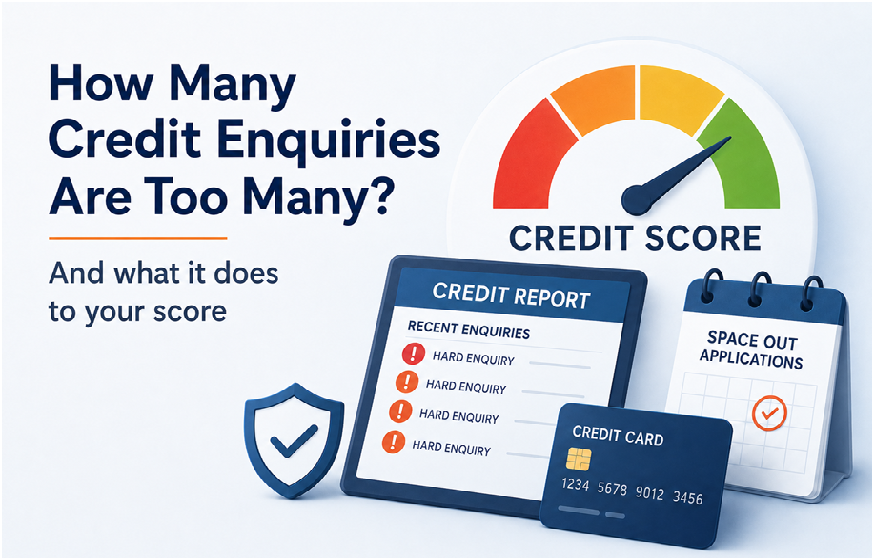
Every time you apply for a credit card, personal loan, or even a buy-now-pay-later facility, the lender pulls your credit report, and that pull leaves a mark. Most people don’t realize how quickly these marks add up or how much they can quietly drag down a credit score that otherwise looks healthy.
Hard inquiries vs. soft inquiries: Not every credit check affects your score. When you check your own credit report, or when a lender does a pre-approval scan, it’s typically recorded as a soft enquiry, which has no impact on your score. A hard enquiry, triggered when you formally apply for credit and the lender assesses your full profile, is the one that matters, and each one is visible to every future lender who reviews your report.
Why enquiries affect your score at all: credit bureaus like CRIF interpret multiple hard enquiries in a short span as a signal of credit hunger, the assumption being that someone applying for several loans or cards simultaneously may be in financial distress or overleveraging themselves. This is true even if every single application was eventually approved and can impact your CRIF score.
How many is “too many”? There’s no universal magic number, but general guidance suggests that more than 3-4 hard enquiries within 6 months start to affect your score noticeably, and each additional enquiry beyond that compounds the impact. A single enquiry might shave a few points off your score temporarily; multiple enquiries in quick succession can cause a more significant and longer-lasting dip, sometimes 15-20 points or more depending on your existing credit profile.
Enquiries don’t just lower your score; they reduce approval odds. Lenders reviewing your application see the same enquiry history you do. Multiple recent hard enquiries can make a lender hesitant to approve a new application, creating a frustrating cycle: rejected applications lead to more applications elsewhere, which generate more enquiries, which further lower approval odds.
How long do enquiries stay on your report? Hard enquiries typically remain visible on your credit report for up to two years, though their impact on your score diminishes significantly after the first six to twelve months, assuming no new enquiries are added during that period.
Smart ways to manage enquiries
- Space out applications. If you’re planning to apply for multiple products, spread them out over several months rather than applying to five lenders in the same week.
- Use pre-approval and eligibility checks wherever available; these typically use soft enquiries and let you gauge approval likelihood without denting your credit score.
- Research and shortlist before applying; rather than applying broadly and hoping one gets approved, a scattergun approach generates unnecessary hard enquiries.
- Avoid rate-shopping across many lenders simultaneously for personal loans or credit cards; a couple of well-chosen applications based on your actual eligibility work better than many speculative ones.
- Monitor your own credit report regularly using soft-enquiry checks, so you know your standing before you apply and avoid unnecessary rejections that generate further enquiries.
A strong credit score isn’t just about repayment history, and utilization enquiry behavior is a real, measurable factor that many borrowers overlook until a rejection forces them to look closer. Being deliberate about when and how often you apply for credit protects a score that took years to build.
To check where your credit score currently stands and understand what’s affecting it, you can explore the credit score tools available at Airpay Money.